Onboarding, Untangled
Redesigning developer onboarding for Sabre, from two weeks of guesswork to one guided setup wizard.
- Lead UX Researcher
- Product Designer
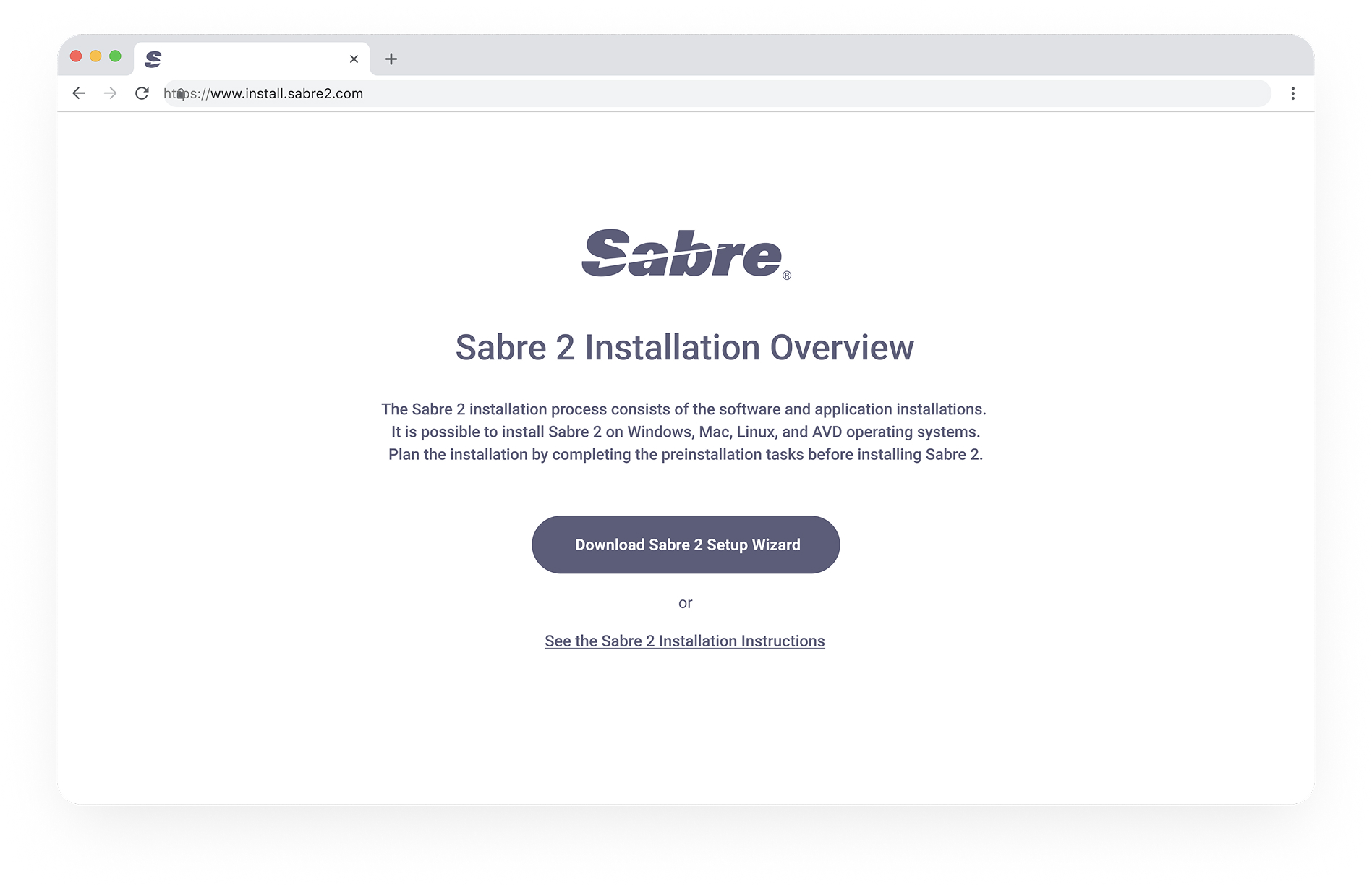
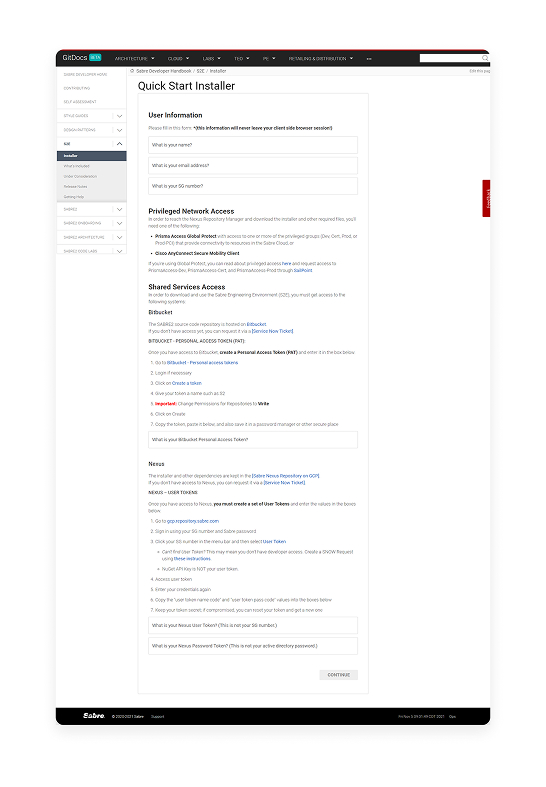
Sabre is a US travel technology company onboarding roughly 100 new developers every month. Each one had to install the Sabre Engineering Environment, known internally as S2E, before doing any real work. That meant up to two weeks waiting for access, no standardized instructions, and constant back and forth with managers over links and Google Docs.
My team and I had seven weeks to redesign the installation process end to end.
Research
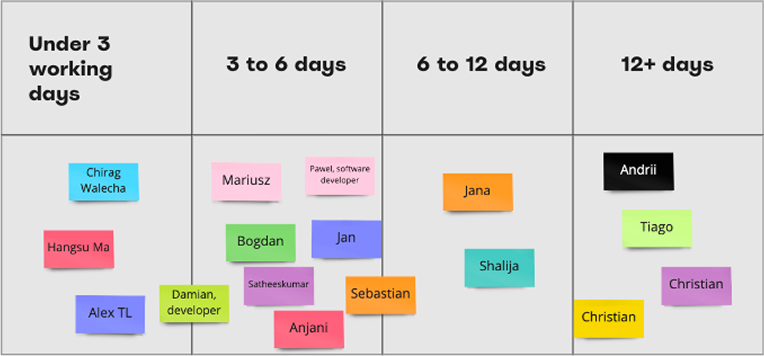
We ran a moderated workshop with ten Sabre developers and engineers who had recently been onboarded, using Miro to prioritize pain points live instead of relying on one-off interviews.
Ten participants. One shared board. Real votes on what actually slowed them down, not assumptions.
Four issues came up consistently:
- No clear starting point for the installation guide
- No indication of progress or errors along the way
- A dated, unintuitive interface for a technical audience
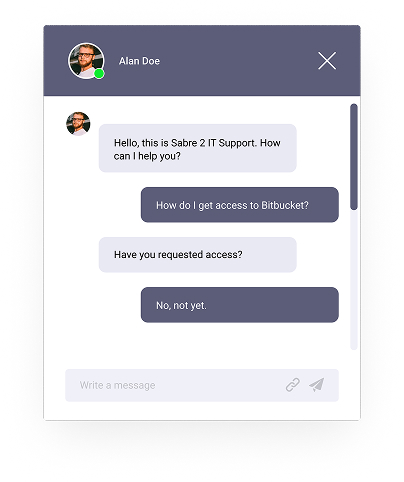
- No direct path to support when something broke
The clearest cost of this: developers reported waiting up to three days for access, with no way of knowing if the delay was a real issue or a typo somewhere upstream.
The solution
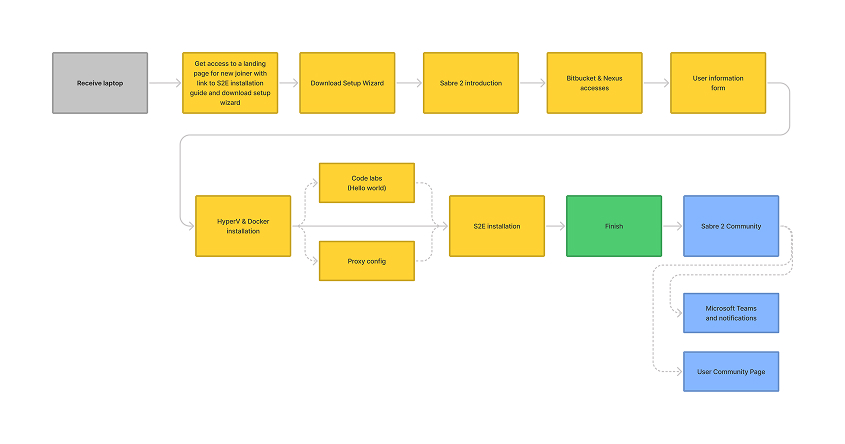
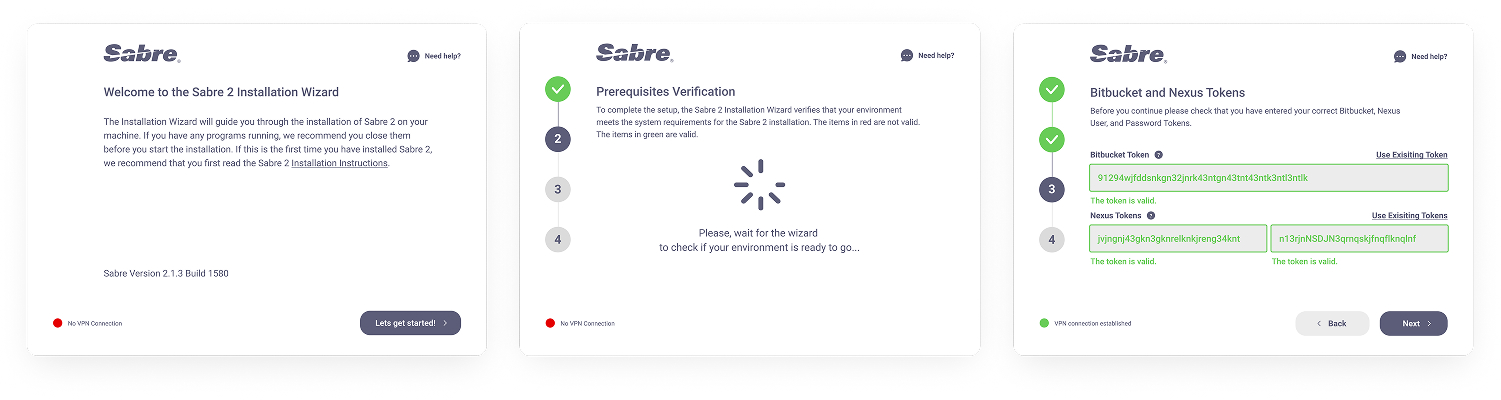
We proposed a Setup Wizard: one guided flow replacing Sabre's scattered docs, external links, and manual credential requests. It was built web-first, since every new hire's onboarding starts the moment they unbox a company laptop, and it used Sabre's existing design system rather than introducing anything new to learn.
Validation
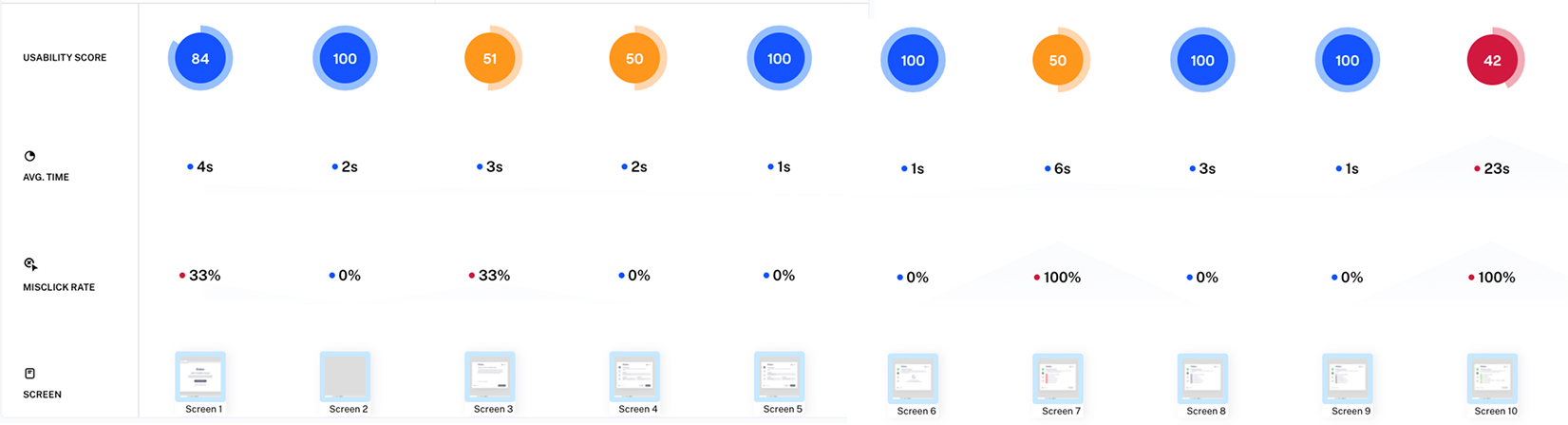
We tested the prototype in Maze with an unmoderated usability study, giving participants real tasks: completing the Sabre2 installation, or finding information about Nexus tokens.
11 responses. 73% rated the flow very easy. Average time per screen: 5.6 seconds.
Result
Both the workshop feedback and the Maze data pointed the same way: the Setup Wizard solved the core issues developers raised. Misclick rate across the flow stayed low at 12.8%, and nearly three quarters of testers rated the new installation process very easy, a sharp contrast to the two-week, no-visibility process it replaced.